With Vietnam poor healthcare evacuation is essential
The first thing any expatriate should do is to pay a visit to a
Vietnamese hospital, visit the best one like Cho Ray or Bach Mai, then you will understand you do not want to end up in a Vietnamese hospital.
Vietnam Public healthcare
Expats who live in Vietnam often report that the standard of the country’s public hospitals is not on par with what they are accustomed to.

Public hospitals in Vietnam are often underfunded and inadequately equipped. Doctors and medical staff at these facilities generally only speak Vietnamese. Furthermore, waiting times can be frustratingly long. In rural areas, the quality and availability of
healthcare are considerably worse, and in some of the more remote parts of the country, public healthcare is almost non-existent. The unsustainably low salaries deter talents and motivation. For these reasons, it makes sense that expats as well as many Vietnamese people opt for private medical treatment wherever possible. Most transactions in public hospitals are through the social security payment system.
Private Healthcare limited investment
The standard of private hospitals in Vietnam is higher but still far from international standards, which most expats would be used to. Private hospitals in Hanoi or Ho Chi Minh City are often staffed by doctors and medical
professionals who complemented their studies in the USA, Korea, Japan and France. However, only going through internships and seminars does not mean they have the mindset and skills to run a hospital. Most times staff in private hospitals are the founder and skilled medical specialists, renowned in Vietnam. But it takes much more to run a hospital efficiently.
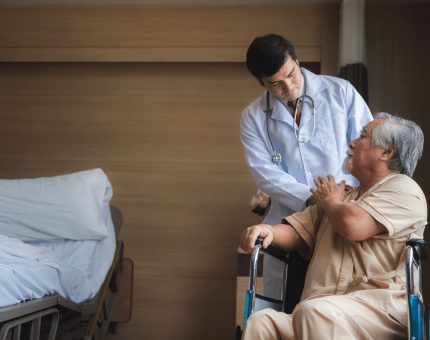
As founders are usually individual specialists with no formal management training or financial back-up, the investment in hospital needs is uneven and insufficient in terms of equipment and processes. The medical team is better paid, the service is good compared to the competition from the government hospitals, everything seems better. Transactions in
private hospitals are mostly cash or credit cards. Local insurers have started to be commonly using and paying for their service in direct billing. They seldom deal with international insurers.
International Hospitals
In most Asean countries except Thailand and Singapore, there are very few international standard hospitals with JCI accreditations. Most of the hospital network is local or outdated due to limited government budgets. The high demand for good medical care by 100 Million inhabitants is not met. Very few investments are made in building and operating international standards hospitals. The reason is 3 fold:
- Lack of infrastructure: investment becomes costly to fully equip such hospitals. The investor may have to pay for additional generators for electricity, water treatment, air purifiers and recycling medical wastes.
- Lack of supporting ecosystem and trained professionals: lab testing, imaging, maintenance, hi-tech medical, lab and pharmaceutical supplies but also doctors and surgeons may all have to be ‘imported’ at inflated prices.
- Lack of demand for high priced treatment or lack of specialty hospitals -due to lack of offer-: that’s why there's a need to send patients, evacuate them to ‘the nearest hospital of excellence’, namely Thailand or Singapore and sometimes Europe for expatriates, when such treatments are needed.
Medical evacuation to Thailand and Singapore hospitals
Thailand and Singapore are ‘the nearest place of excellence’ when it comes to healthcare; they have been investing in world-class medical hospitals for more than 30 years, betting on medical tourism. They attract medical workers from many countries and there is a national competition and promotion to attract Western and American patients. We invite you to explore more about:
Our Insurance Partner. Contact us:
here.